



Ian Matthews
Risk, Supervision, Beneficial Ownership
Ian Matthews is a legal and financial crime expert with significant experience in AML/CFT supervision, beneficial ownership, and international evaluations. A qualified solicitor (England & Wales), Ian brings a unique combination of legal drafting skill and practical regulatory insight, shaped by more than two decades of international engagement.
Ian served as Co-Chair of the FATF Evaluations and Compliance Group (2015-2020) playing a central role in shaping the global approach towards mutual evaluations and assessment. Equally, as part of the UK delegation to the FATF, he participated in both third and fourth round mutual evaluations and was seconded to the European Commission to work on the drafting of the EU’s Fourth AML Directive.
In recent years, Ian has worked closely with a wide variety of jurisdictions to improve risk-based supervision regimes, helping authorities tailor their frameworks to sector-specific risks and demonstrate tangible supervisory outcomes to assessment teams. This work has also involved acting as an expert for the IMF, being a scientific expert to MONEYVAL and working for the World Bank.
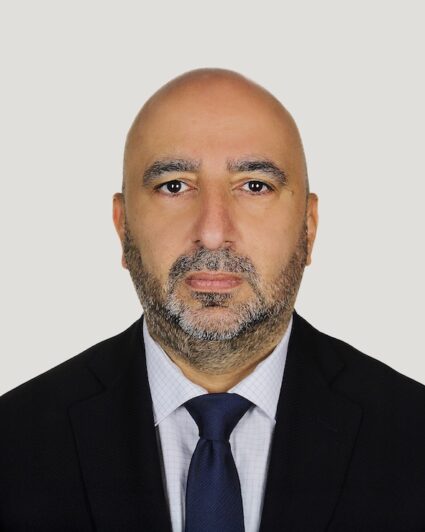
Kamal Abou El Nasr
Risk, Supervision and Financial Intelligence
Kamal Abou El Nasr is a seasoned financial crime and compliance expert with over 20 years of experience with notable skills in risk, supervision and financial intelligence.
Throughout his career, he has held significant leadership roles in both the public and private sectors, including within financial intelligence units, major financial institutions, and regulatory bodies.
As a FATF/MENAFATF assessor, Kamal contributed to the UAE’s 2020 mutual evaluation and re-rating assessment, playing a critical role in regulatory compliance evaluations. He has also served as a certified trainer and keynote speaker, leading international workshops on risk-based supervision, customer due diligence (CDD), enhanced due diligence (EDD), and financial investigations.
Kamal holds an MBA and CAMS certification and has been recognised for his expertise in shaping AML/CFT policies and strengthening compliance frameworks worldwide.

Julian Lamb
Registries, Beneficial Ownership and Risk
Julian Lamb is a leading expert on corporate registries and beneficial ownership frameworks, with over 40 years of experience in financial regulation and digital transformation. He currently works with Governments and international bodies, including the World Bank and the EU Global Facility on AML/CFT, on the implementation of effective registry systems.
As previous Executive Director and Registrar of Companies at the Jersey Financial Services Commission (1999 – 2024), Julian led the design and full-scale digitisation of one of the world’s most advanced company registries. He was directly responsible for building Jersey’s central register of beneficial ownership, ensuring alignment with FATF Recommendations 24 and 25 through hands-on policy, legislative, and technical development.
Julian brings recent practical experience from supporting registry and transparency reforms in countries across Europe, Africa, Asia and Australasia. He is a Chartered Director, a Fellow of both the CISI and ACCA, and has received multiple international awards for innovation in registry design and implementation.